- 您現在的位置:買賣IC網 > PDF目錄371042 > MC68302CFC20 (MOTOROLA INC) Integrated Multiprotocol Processor User’s Manual PDF資料下載
參數資料
| 型號: | MC68302CFC20 |
| 廠商: | MOTOROLA INC |
| 元件分類: | 微控制器/微處理器 |
| 英文描述: | Integrated Multiprotocol Processor User’s Manual |
| 中文描述: | RISC PROCESSOR, PQFP132 |
| 封裝: | PLASTIC, QFP-132 |
| 文件頁數: | 131/480頁 |
| 文件大小: | 1815K |
| 代理商: | MC68302CFC20 |
第1頁第2頁第3頁第4頁第5頁第6頁第7頁第8頁第9頁第10頁第11頁第12頁第13頁第14頁第15頁第16頁第17頁第18頁第19頁第20頁第21頁第22頁第23頁第24頁第25頁第26頁第27頁第28頁第29頁第30頁第31頁第32頁第33頁第34頁第35頁第36頁第37頁第38頁第39頁第40頁第41頁第42頁第43頁第44頁第45頁第46頁第47頁第48頁第49頁第50頁第51頁第52頁第53頁第54頁第55頁第56頁第57頁第58頁第59頁第60頁第61頁第62頁第63頁第64頁第65頁第66頁第67頁第68頁第69頁第70頁第71頁第72頁第73頁第74頁第75頁第76頁第77頁第78頁第79頁第80頁第81頁第82頁第83頁第84頁第85頁第86頁第87頁第88頁第89頁第90頁第91頁第92頁第93頁第94頁第95頁第96頁第97頁第98頁第99頁第100頁第101頁第102頁第103頁第104頁第105頁第106頁第107頁第108頁第109頁第110頁第111頁第112頁第113頁第114頁第115頁第116頁第117頁第118頁第119頁第120頁第121頁第122頁第123頁第124頁第125頁第126頁第127頁第128頁第129頁第130頁當前第131頁第132頁第133頁第134頁第135頁第136頁第137頁第138頁第139頁第140頁第141頁第142頁第143頁第144頁第145頁第146頁第147頁第148頁第149頁第150頁第151頁第152頁第153頁第154頁第155頁第156頁第157頁第158頁第159頁第160頁第161頁第162頁第163頁第164頁第165頁第166頁第167頁第168頁第169頁第170頁第171頁第172頁第173頁第174頁第175頁第176頁第177頁第178頁第179頁第180頁第181頁第182頁第183頁第184頁第185頁第186頁第187頁第188頁第189頁第190頁第191頁第192頁第193頁第194頁第195頁第196頁第197頁第198頁第199頁第200頁第201頁第202頁第203頁第204頁第205頁第206頁第207頁第208頁第209頁第210頁第211頁第212頁第213頁第214頁第215頁第216頁第217頁第218頁第219頁第220頁第221頁第222頁第223頁第224頁第225頁第226頁第227頁第228頁第229頁第230頁第231頁第232頁第233頁第234頁第235頁第236頁第237頁第238頁第239頁第240頁第241頁第242頁第243頁第244頁第245頁第246頁第247頁第248頁第249頁第250頁第251頁第252頁第253頁第254頁第255頁第256頁第257頁第258頁第259頁第260頁第261頁第262頁第263頁第264頁第265頁第266頁第267頁第268頁第269頁第270頁第271頁第272頁第273頁第274頁第275頁第276頁第277頁第278頁第279頁第280頁第281頁第282頁第283頁第284頁第285頁第286頁第287頁第288頁第289頁第290頁第291頁第292頁第293頁第294頁第295頁第296頁第297頁第298頁第299頁第300頁第301頁第302頁第303頁第304頁第305頁第306頁第307頁第308頁第309頁第310頁第311頁第312頁第313頁第314頁第315頁第316頁第317頁第318頁第319頁第320頁第321頁第322頁第323頁第324頁第325頁第326頁第327頁第328頁第329頁第330頁第331頁第332頁第333頁第334頁第335頁第336頁第337頁第338頁第339頁第340頁第341頁第342頁第343頁第344頁第345頁第346頁第347頁第348頁第349頁第350頁第351頁第352頁第353頁第354頁第355頁第356頁第357頁第358頁第359頁第360頁第361頁第362頁第363頁第364頁第365頁第366頁第367頁第368頁第369頁第370頁第371頁第372頁第373頁第374頁第375頁第376頁第377頁第378頁第379頁第380頁第381頁第382頁第383頁第384頁第385頁第386頁第387頁第388頁第389頁第390頁第391頁第392頁第393頁第394頁第395頁第396頁第397頁第398頁第399頁第400頁第401頁第402頁第403頁第404頁第405頁第406頁第407頁第408頁第409頁第410頁第411頁第412頁第413頁第414頁第415頁第416頁第417頁第418頁第419頁第420頁第421頁第422頁第423頁第424頁第425頁第426頁第427頁第428頁第429頁第430頁第431頁第432頁第433頁第434頁第435頁第436頁第437頁第438頁第439頁第440頁第441頁第442頁第443頁第444頁第445頁第446頁第447頁第448頁第449頁第450頁第451頁第452頁第453頁第454頁第455頁第456頁第457頁第458頁第459頁第460頁第461頁第462頁第463頁第464頁第465頁第466頁第467頁第468頁第469頁第470頁第471頁第472頁第473頁第474頁第475頁第476頁第477頁第478頁第479頁第480頁
Communications Processor (CP)
MOTOROLA
MC68302 USER’S MANUAL
4-11
4.4.1 IDL Interface
The IDL interface is a full-duplex ISDN interface used to interconnect a physical layer device
(such as the Motorola ISDN S/T transceiver MC145474) to the integrated multiprotocol pro-
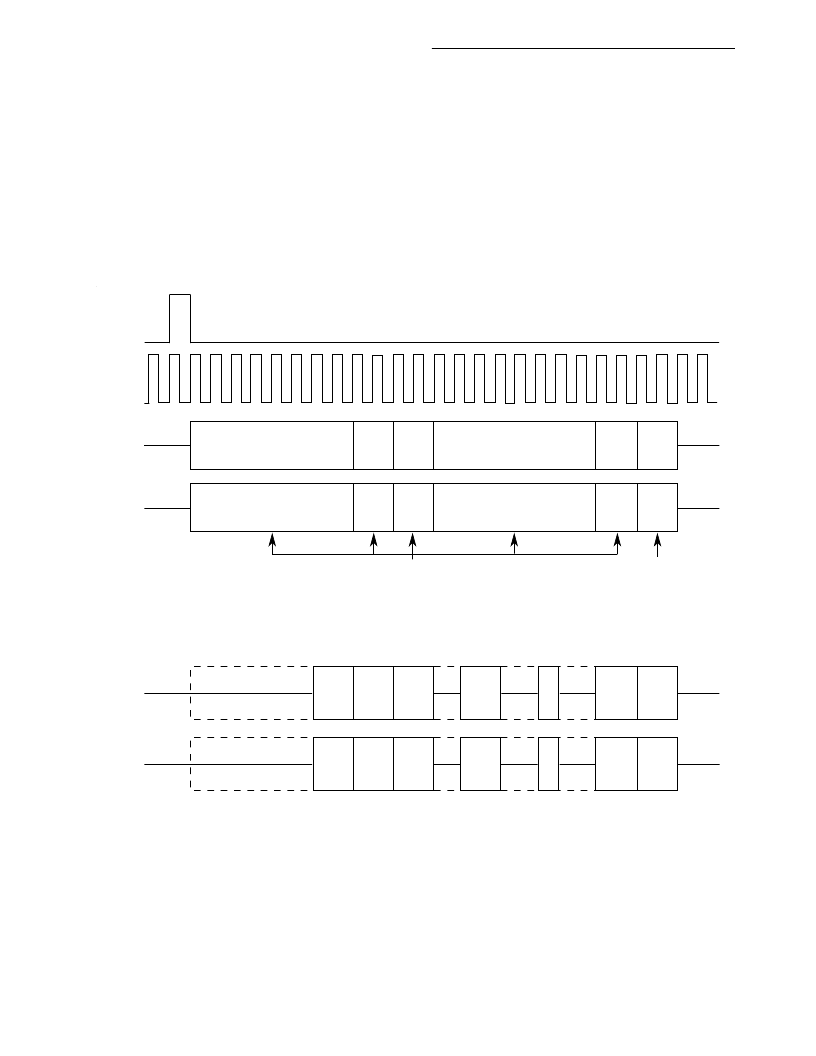
cessor (IMP). Data on five channels (B1, B2, D, A, and M) is transferred in a 20-bit frame
every 125
μ
s, providing 160-kbps full-duplex bandwidth. The IMP is an IDL slave device that
is clocked by the IDL bus master (physical layer device). The IMP provides direct connec-
tions to the MC145474. Refer to Figure 4-6 for the IDL bus signals.
The IMP supports 10-bit IDL as shown in Figure 4-6; it does not support 8-bit IDL.
Figure 4-6. IDL Bus Signals
An application of the IDL interface is to build a basic rate ISDN terminal adaptor (see Figure
4-7). In such an application, the IDL interface is used to connect the 2B + D channels be-
tween the IMP, CODEC, and S/T transceiver. One of the IMP SCCs would be configured to
HDLC mode to handle the D channel; another IMP SCC would be used to rate adapt the
Example: B1 supports 2 bits; B2 supports 3 bits
SIMASK = $26C0; SIMODE = $01B2
L1RXD
D
A
B1
B2
D
M
L1SY1
L1CLK
L1TXD
B1
D
A
B2
D
M
SMC2
SMC1
SCC1–SCC3
L1TXD
L1RXD
THREE-STATE
DON'T CARE
B1
B1
D
A
B2
D
A
B2
B2
B2
D
M
D
M
2
2
1
SCC2
SCC3
SMC2
SCC1
SCC1
SCC3
SMC1
(CLOCK NOT TO SCALE)
(L1RQ and L1GR not shown)
6
1
2
2
1
1
1
1
相關PDF資料 |
PDF描述 |
|---|---|
| MC68302CRC16 | Integrated Multiprotocol Processor User’s Manual |
| MC68302CRC20 | Integrated Multiprotocol Processor User’s Manual |
| MC68302RC16 | Integrated Multiprotocol Processor User’s Manual |
| MC6802 | Microprocessor With Clock and Oprtional RAM |
| MC68B02P | Microprocessor With Clock and Oprtional RAM |
相關代理商/技術參數 |
參數描述 |
|---|---|
| MC68302CFC20C | 制造商:Motorola 功能描述:68302 |
| MC68302CFE16 | 制造商:未知廠家 制造商全稱:未知廠家 功能描述:Communications Controller |
| MC68302CFE20 | 制造商:未知廠家 制造商全稱:未知廠家 功能描述:Communications Controller |
| MC68302CPV16VC | 功能描述:IC MPU NETWORK 16MHZ 144-LQFP RoHS:否 類別:集成電路 (IC) >> 嵌入式 - 微處理器 系列:M683xx 標準包裝:2 系列:MPC8xx 處理器類型:32-位 MPC8xx PowerQUICC 特點:- 速度:133MHz 電壓:3.3V 安裝類型:表面貼裝 封裝/外殼:357-BBGA 供應商設備封裝:357-PBGA(25x25) 包裝:托盤 |
發(fā)布緊急采購,3分鐘左右您將得到回復。